
Short answer. All meals prepared on board are included, along with mineral water, coffee and tea. Alcoholic and soft drinks are not, and neither are personal snacks. Dietary requirements need to reach the booking desk before departure, because the galley provisions in Labuan Bajo and cannot restock at sea.
Food is the part of a liveaboard nobody researches and everybody remembers. It is also where the difference between a well-run boat and a cheap one shows up three times a day. Here is what is actually included, how the galley works, and what you need to say in advance.
What is included?
The operator’s published inclusion list is explicit: all meals prepared on board, plus mineral water, coffee and tea. The exclusions are equally explicit: alcoholic and non-alcoholic beverages beyond water, coffee and tea, and personal snacks.
| Included | Not included |
|---|---|
| Breakfast, lunch and dinner every day on board | Beer, wine and spirits |
| Mineral drinking water throughout | Soft drinks and juices |
| Coffee and tea | Personal snacks and confectionery |
| Afternoon service around the schedule | Meals ashore in Labuan Bajo before or after the trip |
That is a normal structure for the Indonesian liveaboard market, and it is worth knowing when you compare quotes: a boat advertising a lower headline rate with drinks included may well be the same money once you total it. The full inclusion list sits on the 3D2N open-trip page.
What does the food actually look like?
Indonesian liveaboard galleys generally cook a mix of Indonesian and Western dishes, served buffet-style so people can take what suits them. Fish and seafood feature, rice and noodles feature, fresh fruit features heavily because the climate makes it good and cheap. Breakfast tends toward eggs and fruit with the option of something more substantial before a 06:00 trek morning.
The rhythm is dictated by the schedule rather than by a restaurant clock. On the published route, day one has lunch on board at 13:00 between Kelor and Manjarite and dinner at anchor off Kalong; day two has breakfast at 08:15 after the Padar trek and lunch at 12:30 before Manta Point. You eat when the boat is between things, which is exactly how it should be.
Where you eat
On an open-air dining area and the sundeck, which is the correct answer for this climate. Eating dinner at anchor off Kalong with the bats going over is one of the things people actually remember about the trip, and it does not happen in a windowless saloon.
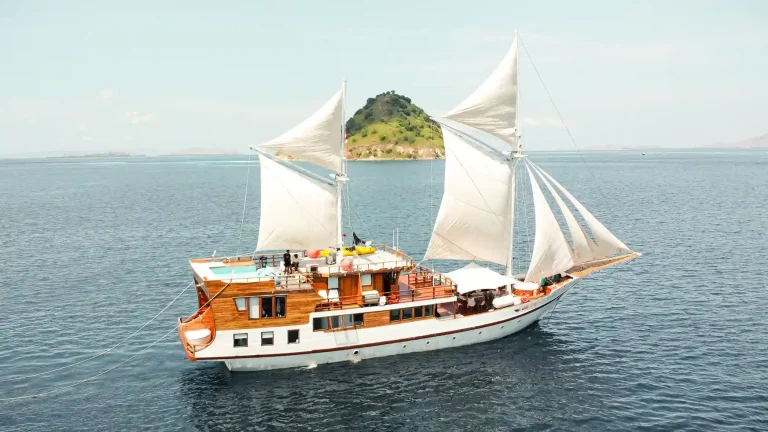
On a 34-metre hull with a 6.3-metre beam there is enough deck for a group to spread out rather than queue, which matters at full capacity. The layout is described on the vessel overview page.
Dietary requirements: say it early
This is the practical heart of the page. The galley provisions in Labuan Bajo before departure and then cannot restock, because there is no shop between Kelor and Komodo. Vegetarian, vegan, gluten-free, nut allergy, shellfish allergy, halal and any other requirement has to be with the booking desk in writing before the boat sails.
- Send requirements when you book, not the week before and not on the morning.
- Be specific. Vegetarian means different things to different galleys; say whether fish and eggs are acceptable.
- Flag severe allergies explicitly, and bring your own medication for them.
- Ask for written confirmation that the requirement has been recorded for your departure.
- Bring your own snacks if you have a restrictive diet; personal snacks are excluded anyway.
A well-run galley handles this easily with notice and cannot handle it at all without. The companion packing list covers what else to bring for a restricted diet.
Water, showers and 12 tonnes
The published specification lists a freshwater capacity of 12 tonnes, which is 12,000 litres. Spread across up to 24 guests and crew over three days, that is a genuinely generous allocation and it is why fresh showers after snorkelling are not rationed on a boat this size in a way they can be on smaller vessels.
Common sense still applies. Fresh water at sea is a finite resource that had to be loaded in Labuan Bajo, so short showers rather than long ones, and rinse the salt off rather than running a spa. Drinking water is separate and provided throughout.
| Specification | Detail |
|---|---|
| Length overall | 34 m |
| Beam | 6.3 m |
| Hull and deck material | Ironwood and teak |
| Guest cabins | 10 |
| Guest capacity | 22-24 |
| Main engine | Mitsubishi 8M21 |
| Generators | Mitsubishi PS120 x 2 |
| Average cruising speed | 6-9 knots |
| Fuel capacity | 5 tonnes |
| Freshwater capacity | 12 tonnes |
| Navigation | AIS, GPS, Radar SART |
| Emergency communication | EPIRB |
Bringing your own drinks
Because alcohol and soft drinks are excluded, most guests buy what they want in Labuan Bajo before boarding. Ask the booking desk first about their policy on bringing drinks aboard and about chilling and storage, since fridge space is finite and the answer varies between operators. Do not assume, and do not turn up with a crate unannounced.
One practical note for the group: alcohol and 06:00 treks in tropical heat are a poor combination, and the Padar morning is the one people regret. Cost-structure comparisons including drinks are in the guide to Komodo liveaboard costs, and departures across the season are listed as the fleet’s 2027 departures.
Inclusions are vessel-specific. The included and excluded items above are the operator’s own published list for this vessel, read 31 July 2026. Menus, service times and drink policies vary between boats and between departure types. Confirm yours in writing when you book.
Sailing with Lady Grace
Send dietary requirements in writing at the time of booking and ask for written confirmation that they are recorded for your departure.
WhatsApp +62 811 3823 875 · [email protected]
Lady Grace is operated by Komodo Luxury in Labuan Bajo. Quotes, availability, deposit terms and cancellation terms are issued by the operator in writing before payment.