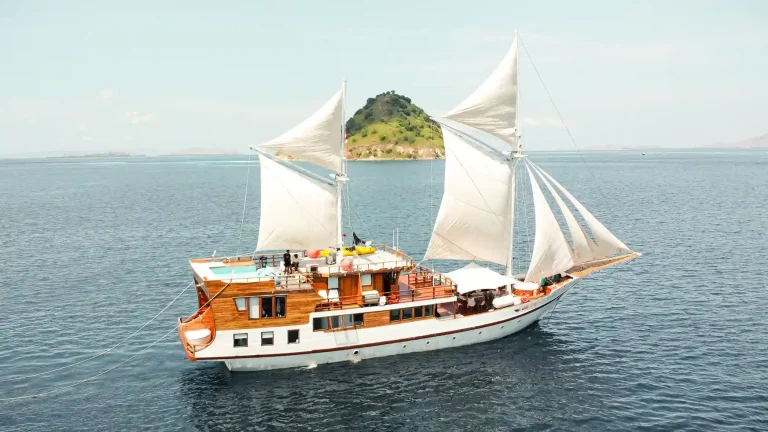

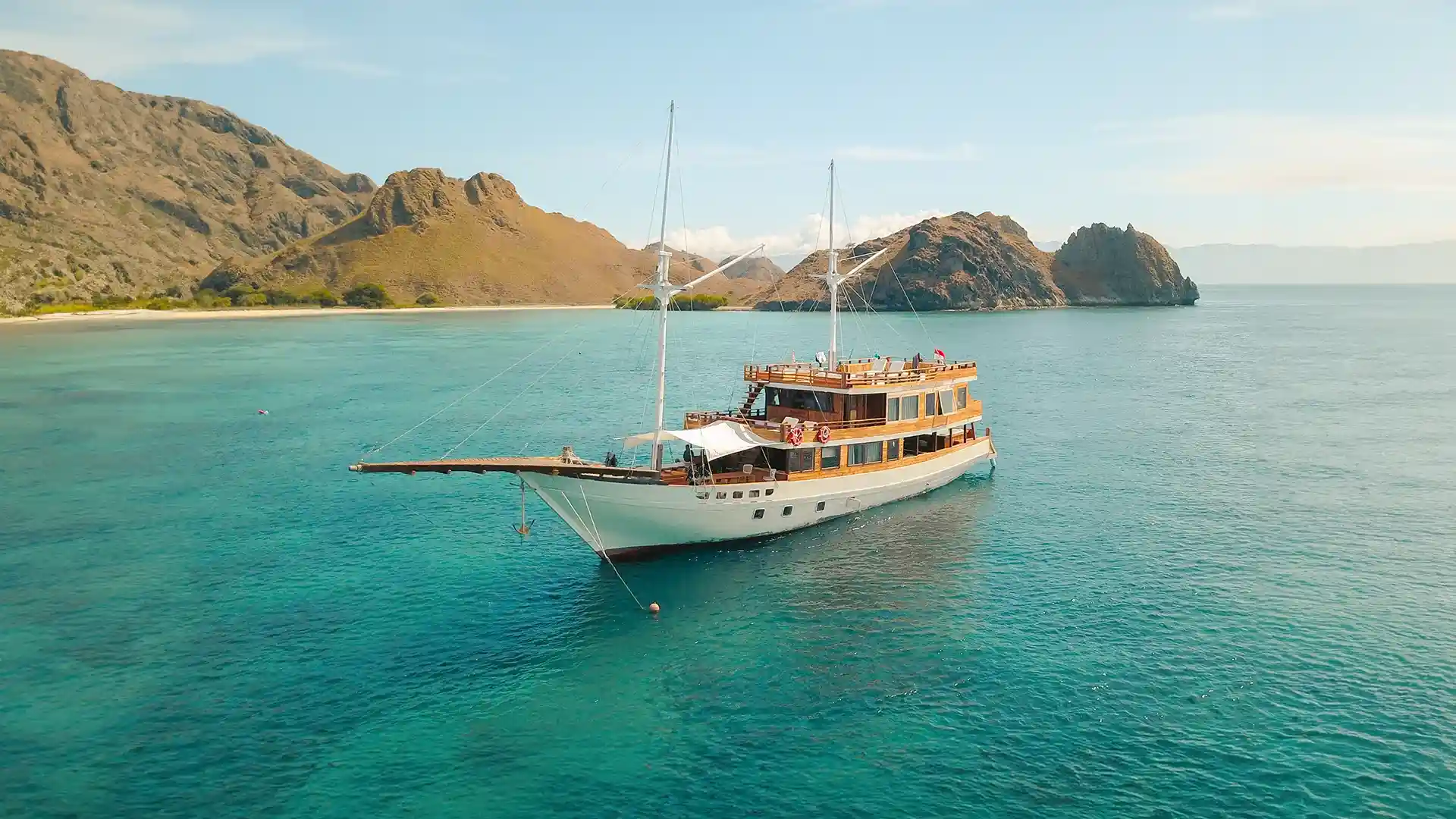
Short answer. A phinisi is a traditional Indonesian wooden sailing vessel, historically two-masted with seven sails, built by Bugis and Konjo shipwrights in South Sulawesi around Tana Beru and Bira. The shipbuilding craft is recognised by UNESCO as intangible cultural heritage. Modern Komodo liveaboards are engine-powered descendants of that hull.
Almost every boat you will be offered in Labuan Bajo is described as a phinisi. Very few listings explain what that word means, where the design comes from, or why it matters when you are choosing where to sleep for three nights. This is the short, accurate version.
Where does the phinisi come from?
The design belongs to the seafaring communities of South Sulawesi, particularly the Bugis and Konjo people of the Bulukumba region, with Tana Beru and Bira as the historic building centres. These were trading vessels: they carried cargo across the Indonesian archipelago and well beyond it, long before anyone thought of putting tourists on them.
What sets the tradition apart is that the boats are still built by eye. There are no naval architecture drawings in the conventional sense. The master shipwright works from inherited proportion and experience, laying the keel and shaping the hull with hand tools, and the knowledge passes down through families. UNESCO inscribed the art of Pinisi shipbuilding in South Sulawesi on its Representative List of the Intangible Cultural Heritage of Humanity in recognition of exactly that transmission of craft.
Why ironwood and teak?
The traditional materials are not decorative choices. Ironwood, known in Indonesia as ulin, is dense, extremely hard and highly resistant to marine borers and rot, which is why it is used for structural members and hull planking that lives permanently in salt water. Teak carries natural oils that resist water and movement, which makes it the standard for decks and interior joinery.
| Material | Where it is used | Why |
|---|---|---|
| Ironwood (ulin) | Keel, frames, hull planking | Density and resistance to marine borers and rot |
| Teak | Decks, superstructure, interior joinery | Natural oils resist water; stable underfoot when wet |
| Traditional caulking | Plank seams | Allows the hull to work with the sea rather than against it |
A wooden hull is also quieter and warmer at anchor than a steel or aluminium one, which matters more than you would expect on the second night when the generator is running and you are trying to sleep.
From cargo hull to liveaboard
The transition happened gradually. Engines were added to cargo phinisi through the twentieth century, sails became auxiliary rather than primary propulsion, and hull sizes grew. When Komodo National Park opened up to international visitors, operators realised the same hulls that had carried timber and rice could carry cabins, and the modern liveaboard phinisi was born.
Be clear-eyed about what that means. A modern liveaboard phinisi sails under engine on almost every itinerary; the masts and rigging are heritage and photography rather than propulsion. Anyone marketing a Komodo trip as a sailing holiday in the yachting sense is overselling. What you get instead is a genuinely beautiful, stable, timber-built platform with the deck space and stability of a working ship.
How big is a typical luxury phinisi?
The boutique end of the market sits at roughly 30 to 50 metres with four to eight cabins and eight to sixteen guests. That is the shape most ‘luxury phinisi’ listings describe. Larger hulls exist, and they behave differently: more mass means less motion in a swell, and more deck means more space per guest even at higher capacity.
| Specification | Detail |
|---|---|
| Length overall | 34 m |
| Beam | 6.3 m |
| Hull and deck material | Ironwood and teak |
| Guest cabins | 10 |
| Guest capacity | 22-24 |
| Main engine | Mitsubishi 8M21 |
| Generators | Mitsubishi PS120 x 2 |
| Average cruising speed | 6-9 knots |
| Fuel capacity | 5 tonnes |
| Freshwater capacity | 12 tonnes |
| Navigation | AIS, GPS, Radar SART |
| Emergency communication | EPIRB |
At 34 metres with a 6.3-metre beam, ten cabins and 22 to 24 guests, Lady Grace sits above the typical boutique capacity. That is a real difference rather than a marketing line: it makes the vessel a poor fit for a couple who want an intimate eight-guest boat, and an unusually good fit for an extended family or a corporate group that wants everyone on one hull instead of split across two.
Phinisi or motor yacht?
The honest comparison is not about quality, it is about what the hull is for. A motor yacht gives you speed, air-conditioned interior volume and a more familiar finish. A large phinisi gives you open deck space, a sundeck you actually use, a timber environment that photographs beautifully in Komodo light, and a cruising speed of 6 to 9 knots that turns transits into part of the trip rather than an interruption. The trade-off is set out in detail on the Komodo yacht charter comparison page.
If you are working through a shortlist of vessels, the companion checklist on how to choose a Komodo phinisi turns this into twelve concrete questions to ask before you pay. Sailing dates across the wider group are published on the fleet’s schedule overview.
On heritage claims. Descriptions of Bugis and Konjo shipbuilding, the Tana Beru and Bira building centres and the UNESCO recognition of the craft are drawn from published cultural-heritage documentation reviewed 31 July 2026. Vessel figures are the operator’s own published specification. Ask any operator for the build year and yard of the specific hull you are booking; that detail is boat-specific and should come from them in writing.
Sailing with Lady Grace
Ask the booking desk for the vessel’s build details, deck plan and safety inventory before you commit to any phinisi, this one included.
WhatsApp +62 811 3823 875 · [email protected]
Lady Grace is operated by Komodo Luxury in Labuan Bajo. Quotes, availability, deposit terms and cancellation terms are issued by the operator in writing before payment.